
Poppi, Casentino
At the center of the Casentino, in the heart of Tuscany
The Casentino Tech Hub is in Poppi, in the Casentino valley. An area that is unique for its landscape and quality of life. An authentic land, rich in history, spirituality and unspoilt nature, known for the Foreste Casentinesi National Park, its sanctuaries and its medieval villages.

Spirituality and Romanesque architecture
Sanctuaries and places of spiritual significance
Since the Middle Ages, the Casentino has been the ideal refuge for souls in search of the absolute. Spirituality here is closely bound to stone and forest. From the Sanctuary of La Verna, where Saint Francis received the stigmata in 1224, to the Hermitage and Monastery of Camaldoli, founded by Saint Romuald around the year 1000 and divided between solitary prayer in the forest and community life down in the valley, with its Antica Farmacia, the ancient pharmacy. History and faith also come together in the Romanesque architecture of the parish churches of Romena and Socana, and in the Renaissance complex of the Madonna del Sasso.

Villages, craftsmanship and memory
Villages and traditions of stone, fire and wool
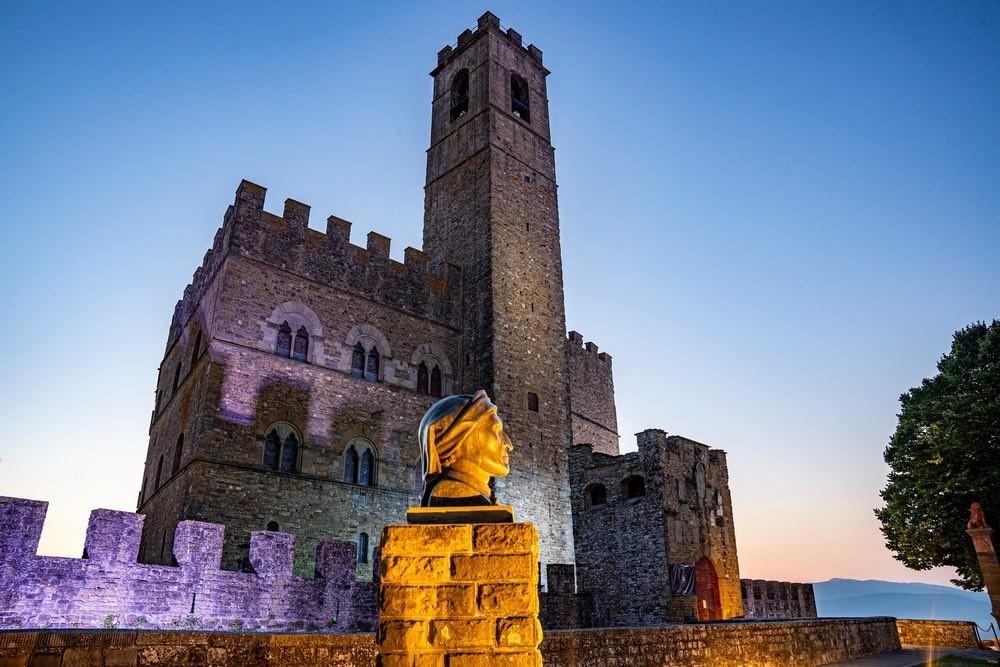
The stones of the old Casentino villages hold a thousand years of history: from the very ancient and mysterious Etruscan settlements to the epic of legendary battles such as Campaldino in 1289. A land that Dante Alighieri also loved, lived in and wrote about. Beginning with Poppi which, with its arcaded lanes and the monumental Castello dei Conti Guidi, is today one of the most beautiful villages in Italy. Bibbiena, the economic capital of the valley, has a historic center rich in grand Renaissance residences and an active cultural life. Stia and Pratovecchio, set at the confluence of mountain streams, were for centuries its productive engines, thanks to outstanding craft traditions that are still preserved, such as wrought-iron working and the celebrated Panno del Casentino.

Contacts
Request information
Write to us for practical directions, to arrange a visit to our premises, or to find out more about the Casentino area.